In Silas en die Ysbeer op Tafelberg (Silas and the Polar Bear on Table Mountain), reality and imagination meet in a soulful way — and it isn’t just for children.
Review
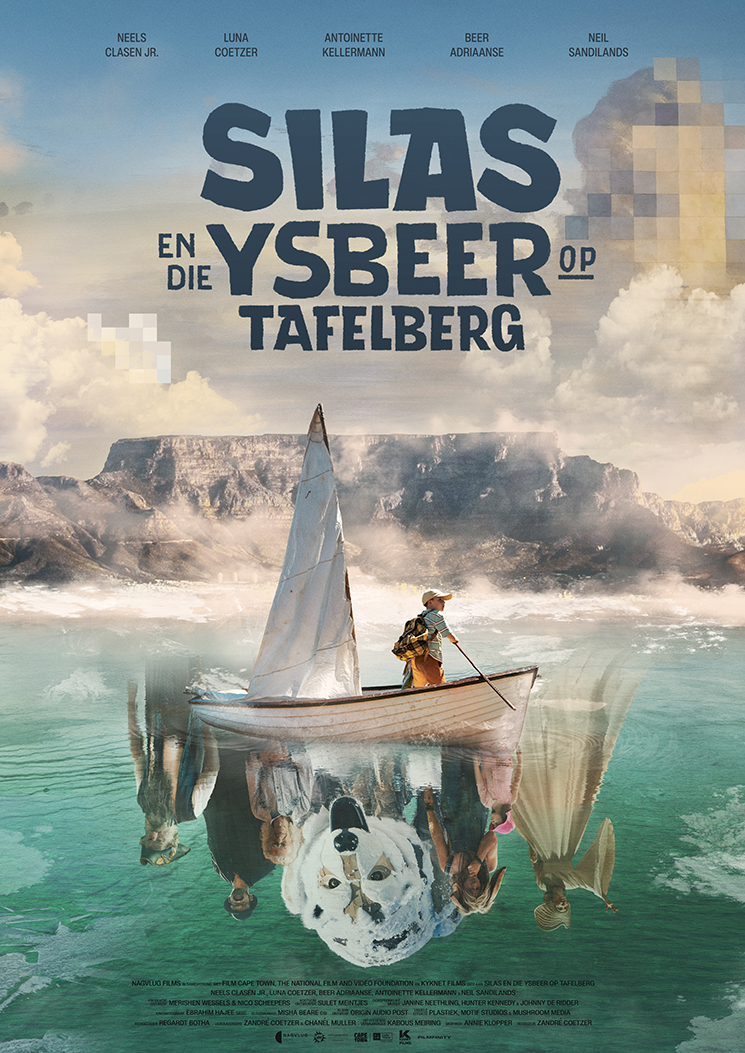
When you hear about a polar bear wandering around on top of Table Mountain, you might expect, at first glance, a shallow children’s story or a bit of light-hearted fable. But the new South African fantasy film Silas en die Ysbeer op Tafelberg (based on the beloved picture book by Zandré Coetzer and Annie Klopper, published by Penguin Random House) takes this surreal idea and turns it into a large-scale, enchanting and deeply emotional cinematic experience.
The film premiered at the Silwerskermfees and goes on national release from 18 September. It took home four awards at the festival: best cinematography (Ebrahim Hajee), best costumes (Sulet Meintjies), best make-up and hair styling (Jolene Cilliers) and best original score (Janine Neethling, Hunter Kennedy, Johnny de Ridder).
The storyline sounds simple: every night Silas’s grandmother (Antoinette Kellermann) sends him off to Dreamland with her wonderful tales — of Husse met Lang Ore, Klaas Vakie the sandman, day sprites and night sprites, Van Hunks puffing clouds of smoke over Table Mountain, and the wish-bucks that shelter on the mountain.
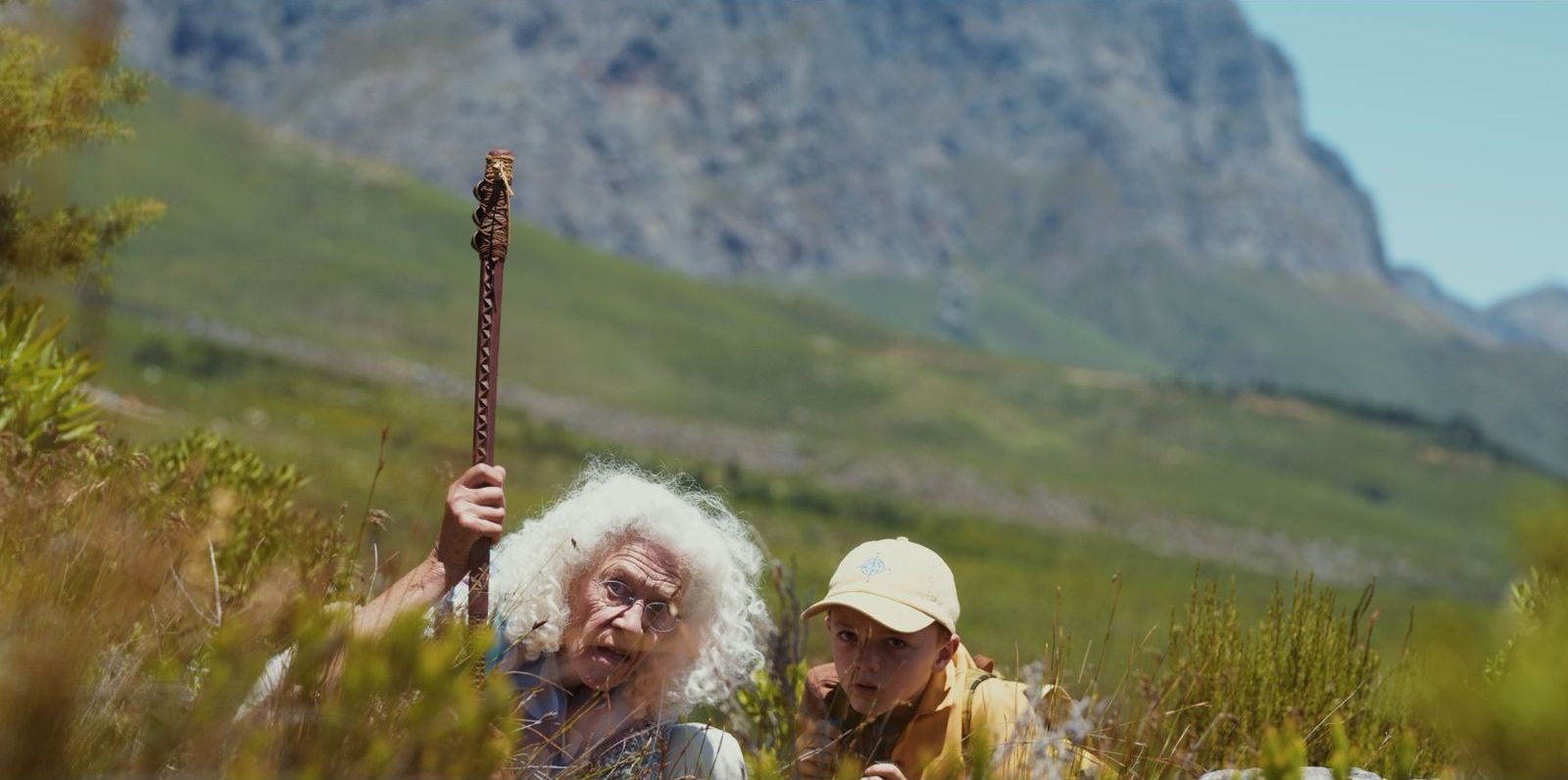
But when Ouma (gran) goes missing one day, Silas decides to go looking for her in Dreamland, where she may simply have lost her way. With the help of the characters she told him about, and Willemien, the new neighbours’ little girl, Silas sets out to find his grandmother. But the Table Mountain of Dreamland is disappearing under snow, and something that roars begins to chase Silas — until he loses his fear of it too.
After the Silwerskermfees I happened to talk to the actor Jefferson J. Dirks-Korkee about our festival favourites. He told me he had cried his eyes out during Silas, and added that he never would have thought a children’s film could stir him up so deeply inside.
It made me wonder why the film had affected me so much as well. I’m an adult, after all, and the film’s core target audience is children between five and eleven. Then I realised it’s because the story illustrates the difficult concepts of death and profound change in a digestible way, drawing the sting out of loss.
At the heart of this enchanting adventure are the performances of the young actors, who steer the film with remarkable honesty. Neels Clasen Jnr. gives a strong reading of Silas, carrying the story’s heavy emotional weight on his small shoulders with a natural fragility. His turn as a little boy trying to process life’s hardest questions is gripping, and makes your throat tighten.
Opposite him, gap-toothed Luna Coetzer shines as Willemien, whose energy and infectious curiosity provide the perfect on-screen balance. The dynamic between the two young actors gives the fantasy world an anchor of real human emotion. They aren’t merely playing roles; they live inside this imagined world and invite the audience to believe along with them.
You can’t discuss this film without singing the praises of its magical score. The original music by Janine Neethling, enriched by the moving contributions of the Akustika Chamber Choir, is woven seamlessly through the narrative. The music almost functions as an additional character, giving voice to Silas’s most intimate feelings before he can even say them.
Highlights include original songs written by Hunter Kennedy and Johnny de Ridder, and — oh my — the goosebump-raising rendition of Ingrid Jonker’s iconic “Toemaar die donker man”. The soundtrack builds a nostalgic atmosphere that wraps warmly around the viewer, much like Silas’s patchwork quilt.
And then there’s the polar bear.
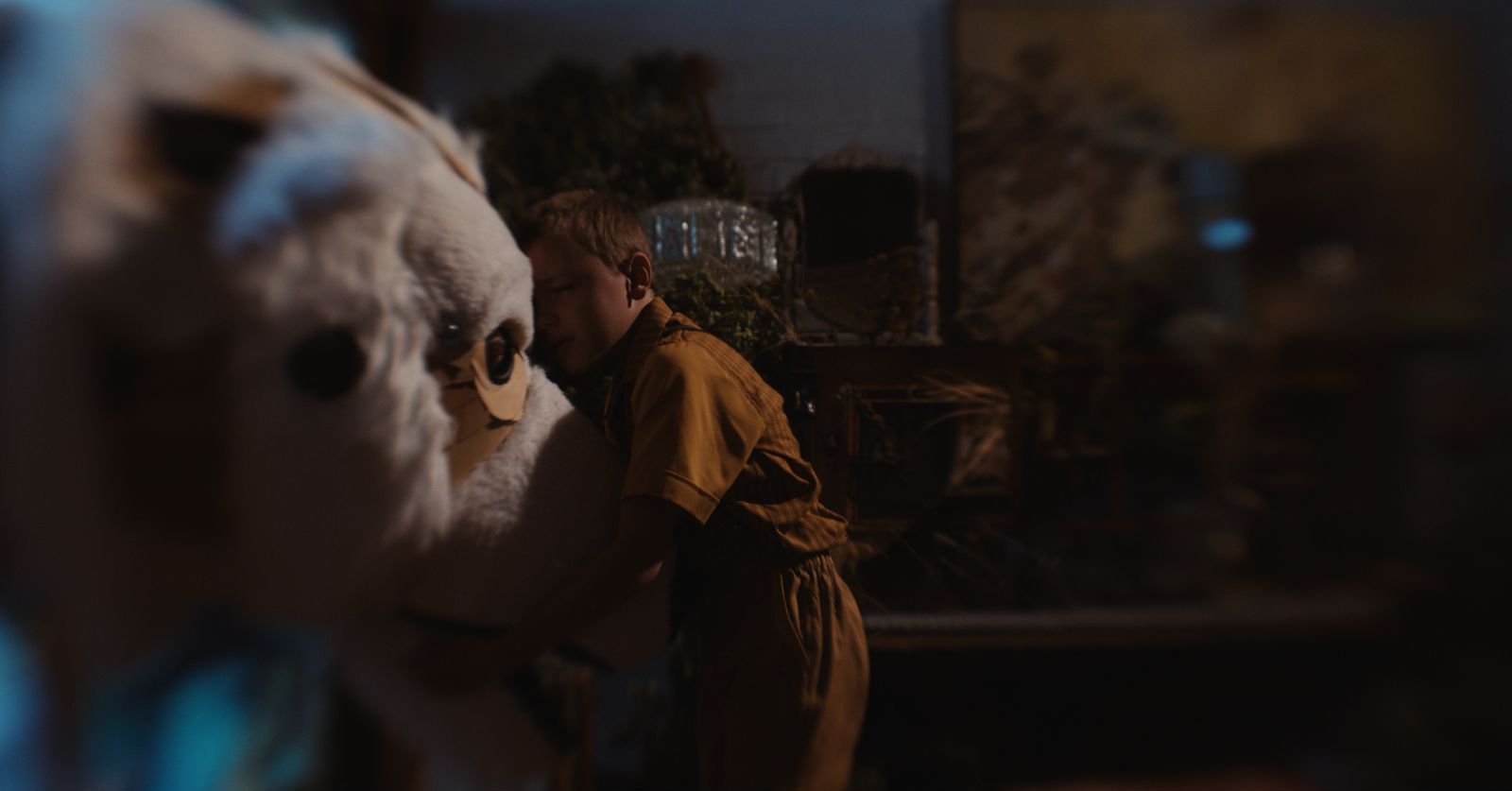
This creation by Trudie Ströh and Estian Gericke is more than a giant puppet. There’s a moment where Silas presses his head against the bear’s, and I flashed back to my own childhood and Falkor, the enormous luckdragon from The Neverending Story (1984). Back then I believed there was a similar creature in the fantasy world watching over every child. Thanks to the excellent puppeteers Sipho Ngxola, Samkelo Zihlangu and Thabo Mkenene, the polar bear becomes more than a character. The fact that he isn’t an artificial intelligence or a digital creation, but a presence with his own breathing, roaring and growling — voiced by Francois Funck — makes him an actor in the film in his own right.
What makes Silas en die Ysbeer op Tafelberg further remarkable is the way it recreates the unfiltered wonder of a child’s imagination on the big screen. In the enchanted Dreamland, a grandmother’s centuries-old folk tales, the wish-bucks, Klaas Vakie and the imaginary friends of our childhoods aren’t just thoughts but breathing realities. Even the half-eared Hus is truly, honestly real.
The film reminds us of that precious period in our own childhoods, when the border between reality and dreams was still easy to cross. Through Silas and Willemien’s eyes, Table Mountain becomes a mythic canvas on which loss, sorrow and hope are painted in the colours of magical realism. This is a story that doesn’t try to water down complicated emotions, but instead offers its audience a safe and beautiful space in which to experience them.
The closing words before the credits roll — “Made by many hands, for our children” — moved me deeply.
If more children could have grandmothers like Silas’s and escape into worlds of imagination, the world would certainly be a better place.
Production Information
Running Time
84 min
Writer and Director
Zandré Coetzer and Annie Klopper | Zandré Coetzer
Website
Screens
∞
Age Restriction
PG 7-9
Cast
Neels Clasen Jnr, Luna Coetzer, Antoinette Kellermann, Beer Adriaanse, Neil Sandilands, Daneel van der Walt, Frieda van den Heever
Rating
4/5
Box Office
See NFVF

Written by Maryke Roberts
Maryke Roberts is an experienced journalist, copywriter and translator, and the owner of Letter Box. She holds a diploma from the Tshwane University of Technology and previously worked at Netwerk24 as a senior journalist, photographer, translator, layout artist and Newspaper in Education project manager. She writes for Vrouekeur about people, books, theatre, travel, and good food and wine—but in plain language: She loves a good story and will go anywhere to get one, whether that’s above the clouds, in a hot-air balloon, in a submarine, or underground in a tunnel. And she believes life is too short for bad coffee.
More Reviews

Variations on a Theme: Visual Poetry of the Rural Landscape and Its People
Review of Variations on a Theme – an award-winning South African film exploring heritage and rural life in Namaqualand through visual poetry.
Hunting Jessica Brok: A South African action heroine that makes Hollywood blush
Hunting Jessica Brok is a high-octane South African action film about a former elite soldier (Danica Jones) forced to confront her violent past when a sadistic enemy (Richard Lukunku) returns for revenge. Packed with explosive action, brutal combat, slick visuals and standout performances, Alastair Orr’s film rivals Hollywood’s best. A ruthless, adrenaline-fuelled thriller.
Finding Optel – Optel may be gone, but the humour certainly isn’t!
Finding Optel is a heartfelt South African comedy-drama about a teenage girl’s quest to find a missing dog — and herself. Filled with humour, emotion, and vibrant visuals, this feel-good film by Jesse and Michaela Joy Brown offers a fresh look at community, family, and healing.

Courses
Acting
Directing
Sound
Cinematography
Producing